


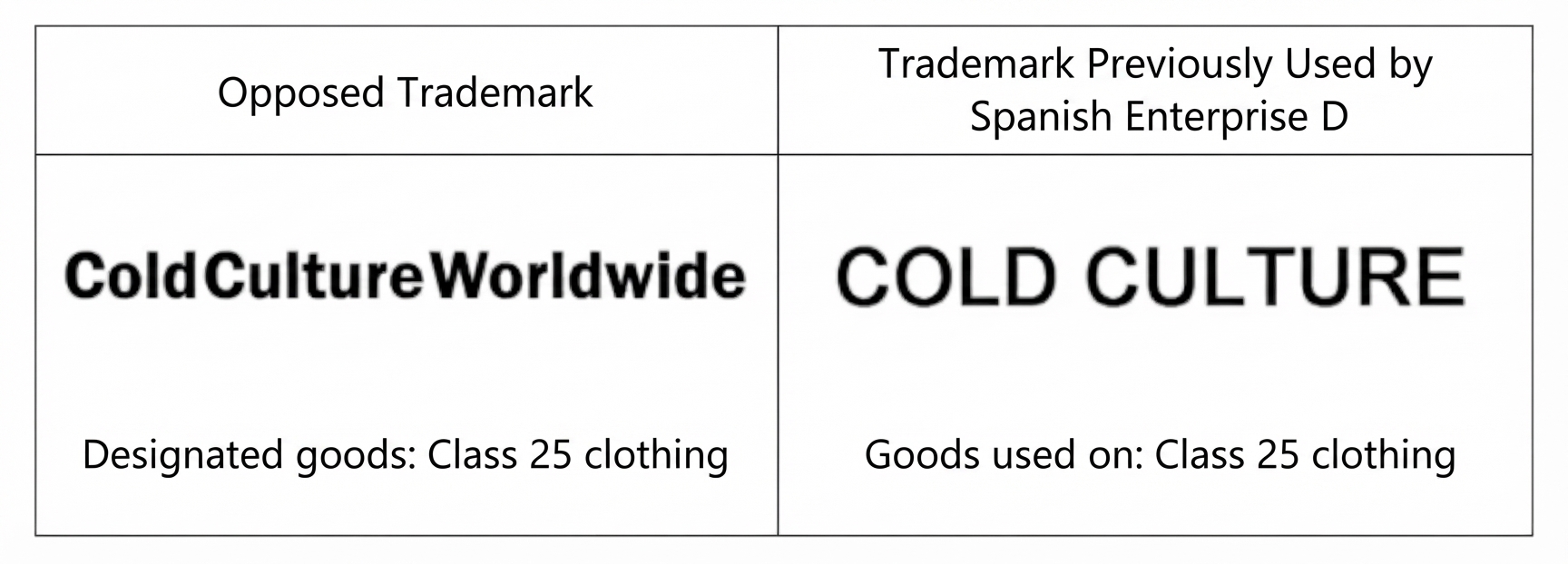
A bad-faith application by another party for the trademark “ColdCultureWorldwide” has been refused registration, protecting Spanish streetwear brand Company D’s “COLD CULTURE” brand in China.
Background
“COLD CULTURE” is a global streetwear brand created by Spanish Company D in 2021. Through online and offline promotion across international markets, the brand has built meaningful recognition among consumers.
“Worldwide” is an important part of the brand’s global identity. Company D uses it in its brand promotion and in the second-level domain name of its official website: coldcultureworldwide.
The Problem
In April 2024, Company D engaged our team to apply for registration of its own trademark, “COLD CULTURE,” in Chinese Mainland.
During the search stage, we found that another party—not Company D—had already applied to register the trademark “ColdCultureWorldwide” for clothing. That application had passed preliminary examination and was approaching registration.
The contested trademark, “ColdCultureWorldwide,” fully incorporated Company D’s earlier brand name, “COLD CULTURE,” and was identical to Company D’s earlier website domain name.
If the conflicting mark had been registered, consumers could reasonably believe that goods sold under “ColdCultureWorldwide” were connected with Company D’s “COLD CULTURE” brand. That would create a serious risk of confusion and weaken Company D’s position in the Chinese market.
Our Strategy
Company D instructed us to file a trademark opposition against the other party’s application for “ColdCultureWorldwide.”
We argued that the contested trademark:
-
Fully incorporated Company D’s earlier brand name, “COLD CULTURE.”
-
Was identical to Company D’s earlier website domain name, “coldcultureworldwide.”
-
Was likely to cause consumer confusion as to the source of the goods.
-
Reflected the applicant’s intention to copy and imitate Company D’s established brand.
-
Was part of a broader pattern of applications for marks similar to trademarks and game names already used by others.
The evidence showed that the application was not an independent commercial choice. Instead, it appeared to be an attempt to take advantage of Company D’s existing brand reputation.
The Outcome
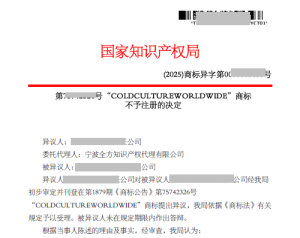
The China National Intellectual Property Administration (CNIPA) recently decided the opposition in Company D’s favor.
CNIPA found that the applicant for the contested trademark had shown an intention to copy and imitate another party’s trademark. It held that this conduct disrupted the normal order of trademark registration administration and was inconsistent with the purpose of China’s Trademark Law, which prohibits obtaining registration through deceptive or improper means.
Final decision: the contested trademark “ColdCultureWorldwide,” applied for by the other party, was not registered.
Why This Matters
This case shows why foreign brands should protect their names in China before problems arise. A brand may be well known overseas, but that does not automatically prevent another party from filing for a similar mark in China.
For brands expanding into China, early action can make the difference between securing the trademark and facing a costly dispute later.
Key Takeaways
-
Register core trademarks in China before launching or expanding in the market.
-
Protect not only the main brand name, but also important domains, sub-brands, and distinctive brand elements.
-
Monitor newly published trademark applications for potentially conflicting filings.
-
File an opposition promptly during the publication period if a conflicting application appears.
-
Keep evidence of overseas use, promotion, sales, domain-name use, and brand recognition.
-
Seek professional advice early when a bad-faith application is identified.
Need Help Protecting Your Brand in China?
Tranfan Law Office advises foreign companies on trademark registration, opposition, invalidation, enforcement, and broader intellectual property protection in China.
If your brand has been copied, squatted, or is at risk of being registered by someone else, contact our trademark team for a tailored protection strategy.