


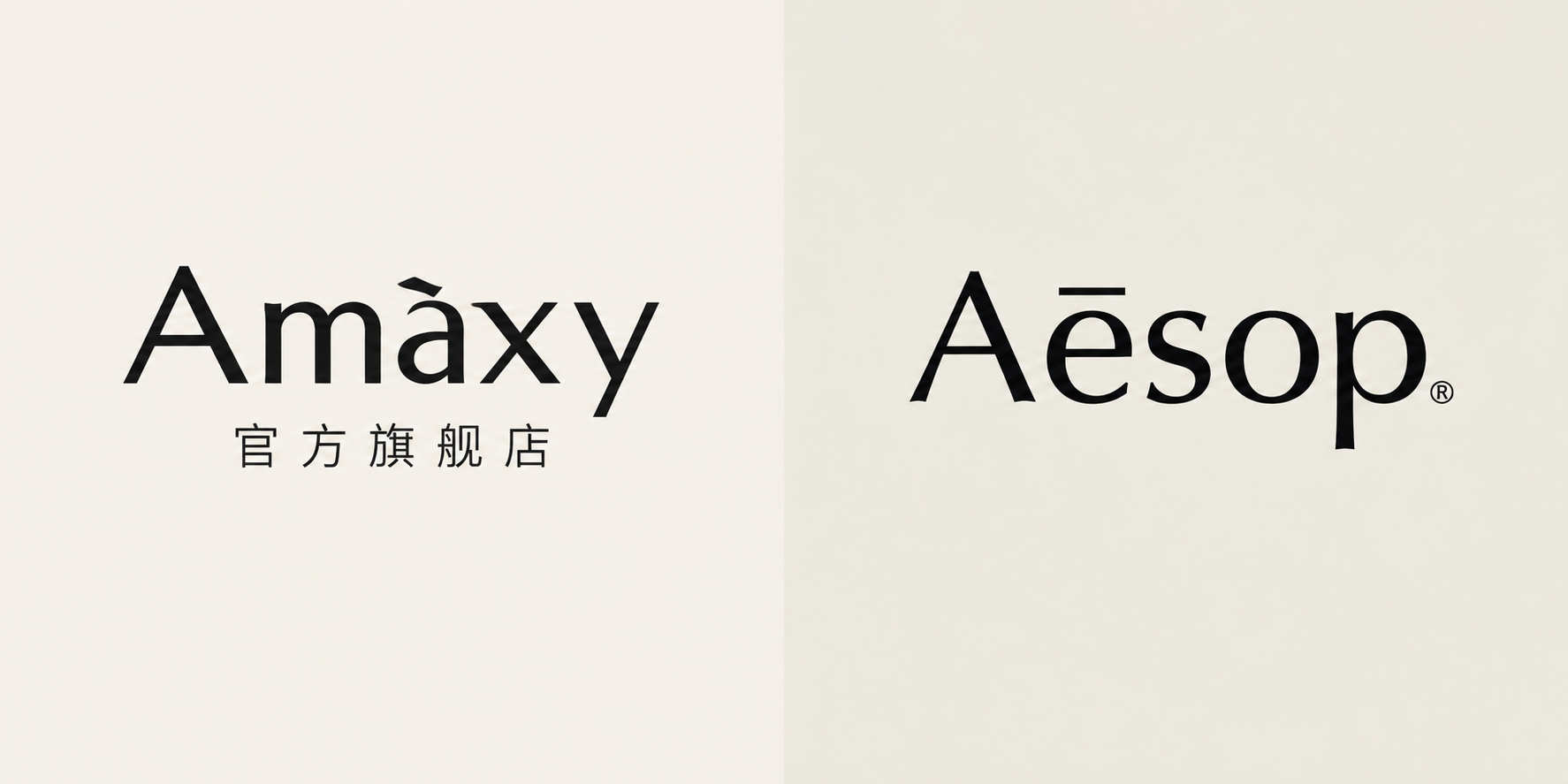
China’s latest packaging dispute highlights the growing importance of trade dress and unfair competition law in brand protection.
Introduction
Can a company protect the look of its products when competitors use similar packaging without copying its name or logo?
That question is at the heart of a reported dispute between Aesop, the Australian-origin skincare brand owned by L’Oréal, and AMAXY, a Chinese personal-care brand. Aesop has reportedly brought an unfair competition lawsuit against seven companies associated with AMAXY, alleging that their products imitate its distinctive packaging. The case was reported as scheduled to be heard by the Shanghai Fengxian District People’s Court on 12 November 2026.
The dispute raises an important question for businesses operating in China: when does similar product packaging become unlawful imitation?
What is the dispute about?
Aesop is known for its minimalist packaging, particularly its amber-coloured bottles, black pump dispensers and rectangular labels. Over time, this combination has become closely associated with the brand’s identity.
AMAXY also sells personal-care products, including hand creams and body-care products. Reports comparing the brands’ products have highlighted similarities in their use of amber-toned containers, black pumps and simple rectangular labels.
Aesop’s claim focuses on the overall appearance of the products rather than simply whether AMAXY has used an identical trademark. The lawsuit reportedly names seven associated companies whose activities span trademark ownership, brand operations, manufacturing and online sales.
The case is significant because it looks beyond the name printed on a product. It asks whether the overall packaging creates an association with another brand that the law should protect against.
Why does packaging matter under Chinese law?
Packaging can do more than protect a product or provide information. For established brands, it can become a recognisable commercial identity that helps consumers identify the product’s source.
In China, this type of protection is often discussed as trade dress protection. Although the term is commonly used in international IP practice, the relevant Chinese legal framework includes the Anti-Unfair Competition Law, which can protect product packaging and decoration that have acquired the necessary level of market recognition.
In broad terms, a claimant must establish that the packaging qualifies for legal protection and that the defendant’s use creates a likelihood of confusion or mistaken association. The precise requirements depend on the applicable legal provisions and the evidence presented.
Importantly, similarity alone does not automatically establish unfair competition. Amber bottles, black caps and rectangular labels are not necessarily exclusive to one business. A court must consider the packaging as a whole, its distinctiveness, its reputation in the market and the likelihood that consumers will be misled.
This makes packaging disputes more complex than a straightforward comparison of two registered trademarks.
Aesop’s earlier dispute provides useful context
The AMAXY case is not Aesop’s first reported attempt to protect its packaging in China.
In an earlier dispute involving the Chinese personal-care brand ANRUZ, Aesop challenged products that allegedly used a similar combination of brown bottles, dark caps and contrasting labels.
According to published reports, Aesop initially lost at first instance but succeeded on appeal. The appellate court reportedly ordered the relevant defendants to stop the infringing conduct and pay RMB 600,000 in damages and enforcement costs. A subsequent application for retrial was reportedly rejected.
The earlier case is relevant because it illustrates how Chinese courts may protect the overall appearance of product packaging through unfair competition law, even where the dispute is not limited to the use of an identical brand name.
However, the ANRUZ outcome does not determine the AMAXY case. The court must assess the specific packaging, evidence and circumstances involved in the new proceedings.
What will the court need to consider?
Several issues are likely to be important in determining the outcome.
First, has Aesop’s packaging acquired sufficient recognition?
Aesop would need to demonstrate that the relevant packaging has acquired the level of market recognition required for legal protection. Evidence of long-term use, sales, advertising, consumer recognition and media coverage may help establish that consumers associate the packaging with Aesop.
Second, how similar are the products overall?
The court is unlikely to assess each packaging feature in isolation. Instead, the overall impression may be important, including the combination of bottle colour, shape, dispenser, label design and text arrangement.
At the same time, common design features and legitimate industry practices must be taken into account. The existence of similar elements does not necessarily mean that a competitor has unlawfully copied a protected commercial identity.
Third, is there a likelihood of consumer confusion?
A central issue will be whether consumers could mistakenly believe that AMAXY’s products originate from Aesop, are affiliated with it or have some other commercial connection to it.
Relevant evidence might include consumer comments, mistaken enquiries, online reviews and other indications of confusion. Such evidence would need to be evaluated alongside the products themselves and the circumstances in which they are marketed.
Finally, who should be held responsible?
The decision to name seven companies is also notable. The defendants reportedly have different roles across the brand’s commercial operations, including manufacturing, brand management and online sales.
The proceedings may therefore raise questions about the responsibility of different entities involved in bringing products to market. Their inclusion in the lawsuit does not, however, establish that each company is liable.
What does this mean for brands operating in China?
The dispute offers several practical lessons for businesses.
For established brands, it highlights the importance of treating packaging as a potentially valuable IP asset. Businesses should document the development and consistent use of their packaging, retain evidence of marketing and consumer recognition, and consider which aspects of their visual identity can be protected through appropriate legal mechanisms.
For emerging brands, the case is a reminder that changing a product’s name or logo may not be enough to avoid legal risk. A product can raise unfair competition concerns if its overall presentation improperly takes advantage of another brand’s established identity.
At the same time, businesses should not assume that every similar design is unlawful. Common colours, container shapes and functional packaging choices may be used legitimately. The legal assessment depends on the overall presentation, the rights being asserted and the available evidence.
The case also illustrates why IP clearance should extend beyond trademark searches. Businesses developing new products should assess packaging and visual identity before launch, rather than relying solely on whether their proposed brand name is available for registration.
Conclusion
The reported Aesop–AMAXY dispute is a useful example of how brand protection extends beyond names and logos. In a competitive consumer market, packaging can become an important indicator of commercial origin, and unfair competition law may offer a means of protecting that identity.
The outcome will depend on the evidence and the court’s assessment of the relevant legal requirements. Until a judgment is issued, it would be premature to conclude that AMAXY has infringed Aesop’s rights.
Nevertheless, the case highlights a broader lesson for businesses operating in China: distinctive packaging can be a valuable commercial asset, but protecting it requires more than demonstrating visual similarity. Brands must establish why their packaging deserves protection and why a competitor’s use crosses the line from legitimate design choice to unlawful imitation.
Sources
- Jiemian News — Reporting on the Aesop–AMAXY packaging dispute and the products involved.
https://www.jiemian.com/article/15195296.html - Jing Daily — Aesop sues Chinese brand AMAXY over lookalike packaging.
https://jingdaily.com/intels/2026-10/16/aesop-sues-chinese-brand-amaxy-over-lookalike-packaging - Eastmoney / Caifuhao — Reporting and packaging comparison relating to Aesop and AMAXY.
https://caifuhao.eastmoney.com/news/20261014110715183296640 - International Trademark Association (INTA) — China Case Law Annual Review, containing background on Chinese IP and unfair competition decisions.
https://www.inta.org/wp-content/uploads/public-files/advocacy/committee-reports/2025-CHINA-CASE-LAW-REVIEW-070125.pdf