


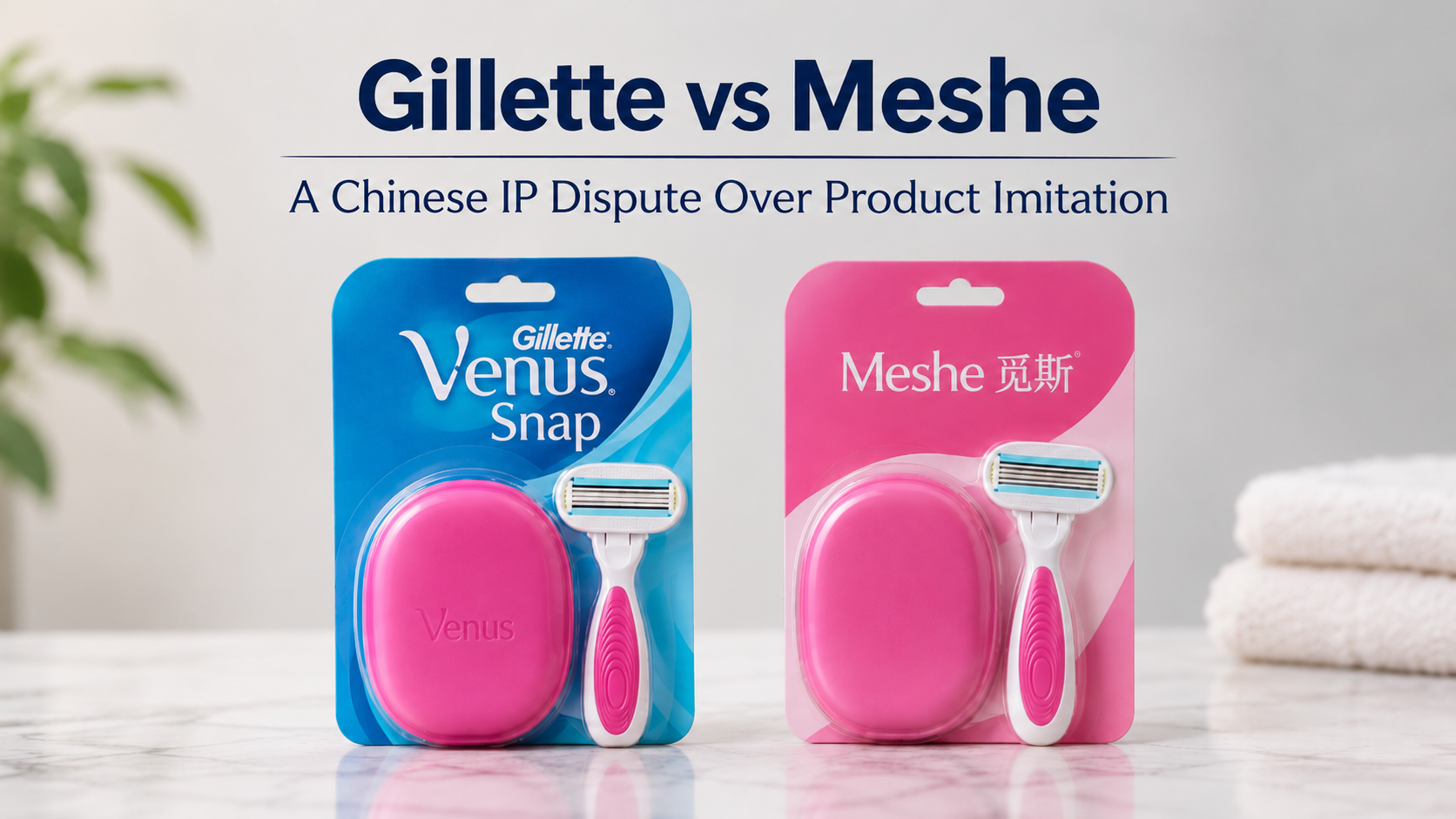
10 July 2025 | China IP Dispute
International brands operating in China face a familiar challenge: how can they protect not only their trademarks, but also the distinctive appearance of their products?
A dispute involving global shaving brand Gillette and Chinese manufacturer Jiangsu Mkodo Electronics Technology Co., Ltd. provides an interesting example.
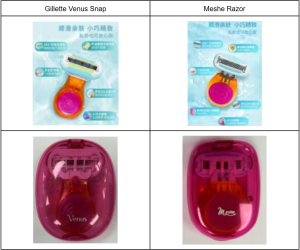
image from: ChangTsi & Partners
The case concerned Gillette’s Venus Snap women’s razor and a competing product marketed under the name Meshe (觅斯). Gillette alleged that the competing product imitated the appearance, packaging and promotional materials of its Venus Snap razor, potentially misleading consumers into associating the two products.
What was the dispute about?
Gillette argued that the competing product closely resembled its Venus Snap razor in several respects, including:
- The shape and colour of the storage case.
- The design and colour combinations of the razor head and handle.
- The overall product packaging and decoration.
- Online promotional photographs and marketing materials.
Gillette brought legal proceedings against Mkodo, the manufacturer, and Yueju (Dalian) Trading Co., Ltd., its distributor.
Rather than relying solely on trademark infringement, Gillette also invoked Article 6 of China’s Anti-Unfair Competition Law, which protects product packaging and decoration that have acquired a certain level of market recognition and could cause consumer confusion.
What did the court decide?
According to the published case report by Chang Tsi & Partners, Gillette’s legal representatives, the Dalian Intermediate People’s Court ruled in Gillette’s favour at first instance.
The court reportedly recognised that the overall appearance and packaging of the Venus Snap razor had acquired sufficient market recognition to qualify for protection.
It also found that the defendants’ competing product presentation constituted unfair competition. The distributor’s use of similar promotional materials was also addressed, while its use of the Gillette name in product listings was found to involve trademark infringement.
Gillette reportedly sought RMB 1 million in compensation. However, the published case report does not clearly establish the final damages awarded.
Why is this case important?
The dispute highlights an important aspect of China’s IP protection system: a brand does not necessarily need to rely on trademark registration alone to protect its commercial identity.
Product packaging, colours, shapes and overall visual presentation may also receive protection under China’s Anti-Unfair Competition Law, provided the relevant legal requirements are met.
For foreign brands, the case offers three practical lessons:
- Protect the entire product identity: Consider product appearance and packaging alongside traditional trademark protection.
- Keep evidence of market recognition: Sales figures, advertising expenditure, consumer reviews and media coverage can help establish that consumers associate a particular appearance with a brand.
- Consider the whole supply chain: Both manufacturers and distributors may face legal consequences for participating in unfair commercial practices.
结论
The Gillette vs Mkodo dispute demonstrates how China’s unfair competition framework can help established brands challenge the imitation of distinctive products.
For foreign companies doing business in China, protecting a brand means more than registering its name and logo. The overall appearance of a product and the reputation built around it can also be valuable intellectual property assets.
来源
- Chang Tsi & Partners (10 July 2025) – Chang Tsi Secures Victory for Gillette in Trade Dress Protection Lawsuit.
https://www.changtsi.com/news/insight/3807.html - IPR Daily – English-language report of the Gillette case.
https://www.iprdaily.com/article/index/18249.html - China National Intellectual Property Administration (CNIPA) – Revised Anti-Unfair Competition Law (2025).
https://www.cnipa.gov.cn/art/2026/5/20/art_104_206437.html